CUSTOM HEADWEAR / BUYER GUIDE
Custom Hat Tech Pack for a First Sample: A Handoff Checklist
Prepare a first-sample hat tech pack with decided, proposed and open fields, named artwork versions and supplier questions before reviewing the physical cap.
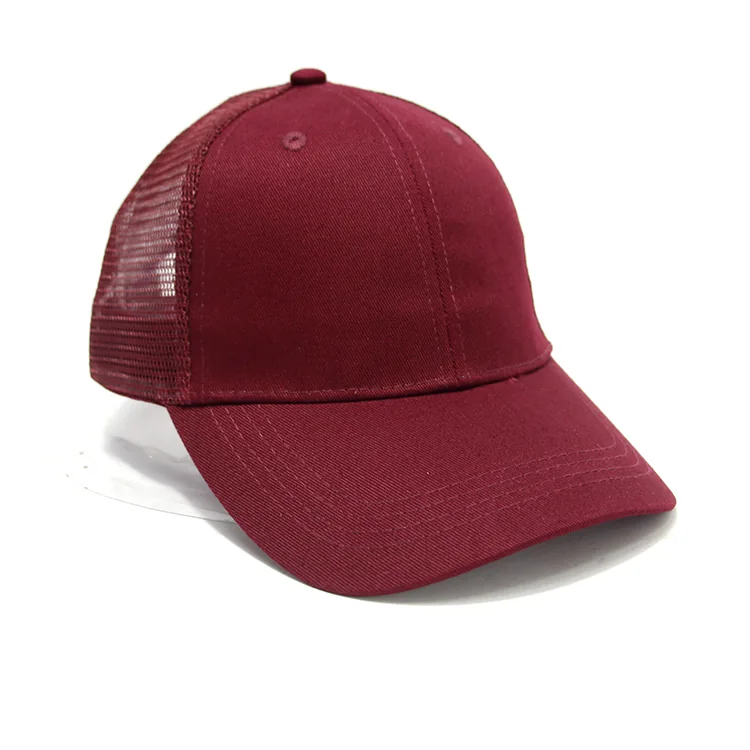
A first-sample tech pack is a handoff record, not a promise that every hat detail has already been settled. It tells a supplier what the buyer has decided, what is only proposed and what still needs an answer. That distinction is useful even when the starting point is just a cap reference, a logo file and an estimated quantity.
The burgundy cap above has a plain front, a mesh-looking side panel and a curved brim. Those visible areas can help name fields in a brief, but the photograph cannot supply missing measurements, fiber composition, decoration feasibility or approval for a future order. Use one document version for the discussion, with artwork and reference images as separate, named attachments.
Start with a brief that has an owner and a version
Put the project ID, brief version and date at the top of the handoff. Name the buyer contact and the person who will answer supplier questions. When you change a decision, issue a new version instead of silently replacing an attachment. The goal is to make it clear which notes belong to the first sample request.
You can begin with the four project brief essentials: hat direction, design reference, estimated quantity and destination or target date if known. Mark a missing answer as open. An estimated quantity helps frame a discussion, but no minimum order, price or lead time follows from this checklist.
The headwear range helps name your starting shape. If your reference is a baseball or dad cap, the cap options give you a category name; the precise crown, brim and closure still belong in the project brief. Do not write “same as photo” when only one feature in the photo matters.
Give each line a decision status
Use decided, proposed and open as working labels for every field. A decided field has a named reference and owner. A proposed field asks the supplier to confirm feasibility. An open field records the question that must be answered before a sample decision. “Decided” describes the buyer’s current instruction; it does not mean the supplier has accepted feasibility or that a physical sample has passed.
| Handoff field | What to attach or specify | Status and next evidence |
|---|---|---|
| Hat shape | Category, front/side reference and the features you mean | Decided, proposed or open; request a matching sample view |
| Structure and size | Crown, brim, closure and named measurement points | List any buyer target with units and source; confirm the measuring method and feasibility |
| Material and color | Proposed material specification, color zones and physical reference if available | Ask what can be sourced; approve shade on the agreed material and finished hat sample as applicable |
| Artwork and decoration | Source file, version, intended position and proposed method | Ask for a placement proof and feasibility response |
| Labels and packing | Required location, wording and presentation, if applicable | Mark missing copy or layout as open rather than inventing it |
| Order context | Quantity estimate, destination and target date if known | Confirm commercial terms for the actual design and order |
If you already have target dimensions or color codes, list them as proposed with their source, units and named measuring points; ask the supplier to confirm feasibility and check them on the physical sample. Leave unknown fields open. Do not copy a dimension, tolerance or performance claim from a photograph or generic template. The customization overview outlines available discussion areas, but the exact materials and decoration method are project decisions.
For illustration only, two lines in that handoff might read:
- Hat shape — attachments
reference-A-front.jpgandreference-A-side.jpg; buyer owner: decided on the visible shape direction; next evidence: supplier’s matching front and side sample views. - Artwork — attachments
logo-source-v2andmarked-front-v1; buyer owner: proposed placement; next evidence: supplier feasibility reply and a finished sample check.
These names are example file IDs, not files from a real order. Each line gives the reviewer an owner, a current status and a way to close the question.
Keep source files separate from annotated views
An annotated image is a map of questions, not the production artwork. Give each original artwork file its own name and version. Put arrows or labels on a copy of the cap reference to identify the front, side, rear or underside locations that matter. Include a simple file list in the brief so a supplier can tell which attachment is current and which is only a visual reference.
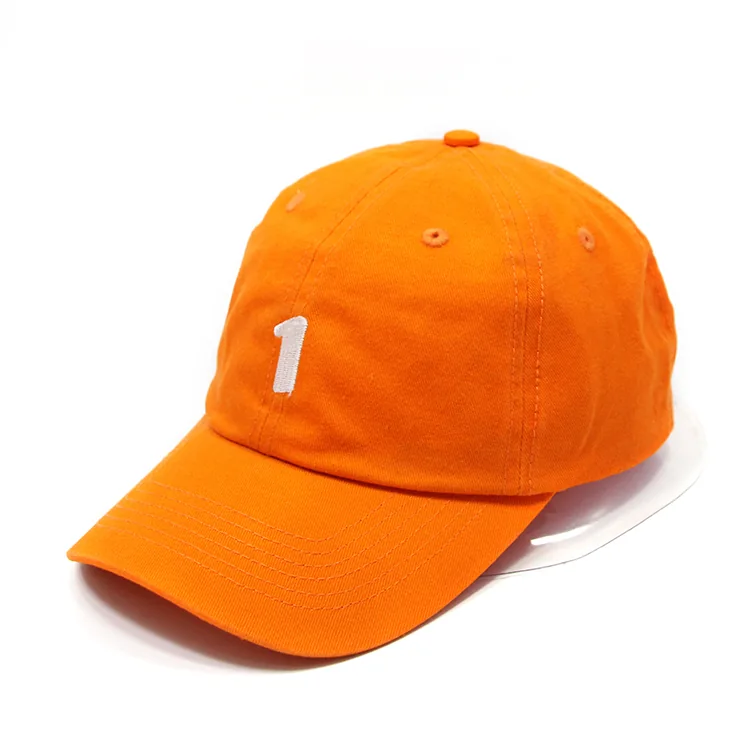
A separate orange cap illustrates why a front graphic needs its own artwork file, version and placement note. This photo is an appearance reference, not a complete specification or proof of rights to reproduce the numeral.
For example, a note can say “front logo position: proposed; see marked front view; use artwork file [name/version]; finished size and method: supplier to confirm.” This is a useful handoff without pretending that a screen preview has settled stitch detail or final dimensions. The 3D Studio can help communicate an early hat-shape or logo concept; it does not replace a marked specification and physical sample.
If a reference photo carries a motif or logo you do not own, do not treat it as artwork to copy. Use owned or licensed artwork, or confirm the rights and available supplier pattern before requesting reproduction. The pattern-placement guide explains how to mark named seams and brim areas when a pattern crosses them.
Convert open cells into specific questions
Send a short question list with the first-sample request. Separate a buyer decision from a supplier feasibility check and from something only the physical sample can prove:
- Buyer decision: Which crown shape, color zones and artwork version are current? Who will approve a change?
- Supplier response: Which proposed material, decoration and construction details can be made for this design? What alternative needs a new decision?
- Sample evidence: Which measurements, views and finished details must be checked on the first physical cap?
Here is a compact handoff example. The brackets are fields to fill, not real order specifications:
Project [ID] · Tech pack [version/date] · Hat direction [category/reference] · Artwork [filename/version] · Quantity [estimate or open] · Destination [country/region or open] · Buyer-decided details [list] · Supplier feasibility questions [list] · First-sample checks [list] · Contact for decisions [name].
When the sample arrives, compare it with the same brief version and record which fields are approved, need revision or remain open. The five-view cap sample guide covers the front, side, rear, inside and overall views to request at that stage. A sample-review note is the next document, not a substitute for the initial handoff.
Ready to begin? Send Alex the current brief and named artwork files, plus the hat direction, estimated quantity and destination you know. An incomplete but clearly labeled brief is easier to discuss than a polished sheet that hides unanswered questions.