CUSTOM HEADWEAR / BUYER GUIDE
Hat Supplier Production Photos: A Buyer Checklist
Use hat supplier production photos to check visible work, site and order context. Learn what images show—and what buyers need to verify separately.
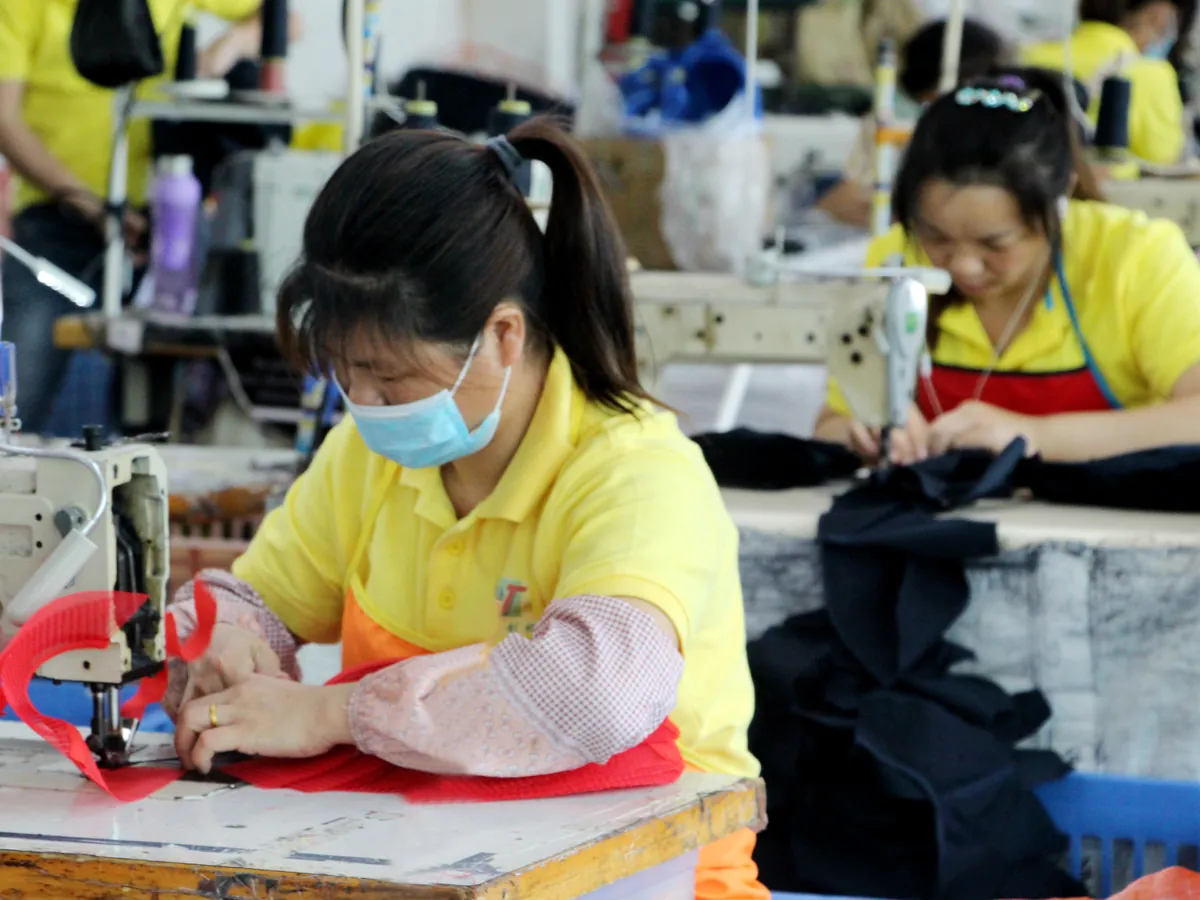
A hat supplier production photo is a useful starting point, not proof of the full production story. It can show visible people, equipment or a task at one moment. By itself, it cannot establish who operates the site, when the image was taken, whether the work belongs to your sample or order, or what quality, capacity or delivery terms apply.
Rongtai is a trading company working with a long-term manufacturing partner in Dongguan. When reviewing a workshop photo, we separate what is visible from details that need their own confirmation. The supplied image shown with this guide depicts a worker guiding red mesh fabric at a sewing machine; it does not identify the item being sewn, the site, the date or an order reference.
Start with what the image actually shows
Describe visible details before drawing conclusions. In this image, a worker is at a sewing machine with red mesh fabric; other people and workstations appear in the background. The photo does not show a finished hat, a style label, a purchase order or a marked sample revision.
That distinction helps buyers ask a specific follow-up instead of treating a general workshop image as proof of a capability. Ask the supplier to caption each photo with the visible operation, the date it was captured, and whether it is a current, historical or illustrative image. A caption is useful context, but it should not be treated as independent verification.
A single still also leaves out what happened before and after the moment shown. If a particular operation matters to your design, ask which part is being handled and how that step relates to the hat construction you are discussing.
Confirm the site and the supplier relationship
A workshop photo does not show who owns or operates the facility. A supplier may work with a manufacturing partner, a subcontractor or a rented production space. The scene alone does not tell you which relationship applies.
Ask for the facility name and location, who operates it, and how that site relates to the supplier handling your project. If site identity is important to your review, arrange a visit or live video walkthrough and compare the details with the supplier information shared for the project. Do not infer ownership from a room, sign, machine or uniform in a photograph.
For a broader description of Rongtai’s long-term manufacturing collaboration and project-review process, see About Rongtai and its supplier evidence notes.
Connect the photo to the hat sample or order
Ask the supplier to link each relevant photo to a named hat style and sample revision. Request the date, operation, hat reference and the point in the sample or order process. Where appropriate, a redacted traveler, job reference or sample tag can help connect an image to the project without exposing another customer’s information.
Check that the visible hat or component matches the features under discussion. A photo of an unspecified sewing task may show an operation, but it does not prove that your cap, color, decoration or revision has reached that stage. If the supplier cannot connect a general image to your project, treat it as background context.
Photos answer a different question from a physical hat sample. Use the five-view cap sample review to document visible features on the actual sample, then record which revision those views show. An on-screen concept has another role: Rongtai’s 3D Design Studio can help communicate a visual position, but it cannot prove where or when a workshop photo was taken.
Use process photos to ask better questions
A visible machine or material can help you ask what happens at a particular step. It does not identify the complete process, input specification or result. Ask what the operator is doing, what check follows, and which part of your approved brief controls the step.
For a custom hat order, separate the request into three records:
- The brief: style reference, artwork version, requested construction and open questions.
- The sample review: the physical sample revision, observed details and changes still required.
- The production update: the order or batch reference, stage shown, capture date and any check completed.
Keep customer names, artwork and order identifiers out of public images unless the client has approved their use. A supplier can redact sensitive fields while leaving enough context for your team to review the project.
Ask for separate evidence of capacity, quality and timing
A photograph cannot verify capacity, a delivery date or a quality result. The number of machines or people visible in one frame does not establish current availability, monthly output, staffing for your order or lead time. A photo also cannot establish fabric composition, product performance, a certification’s scope or whether inspection criteria were met.
For a purchasing decision, ask for the relevant written information: the order-specific schedule and commercial terms, material documentation for the selected component, applicable certificates and their scope, and inspection records against the requirements agreed for your project. Availability and relevance need to be checked for the actual supplier, product and destination. Use the physical sample and the written specification to agree what must be produced and inspected.
Rongtai reviews construction, decoration, fabric and color requirements with its long-term manufacturing partner. Dates, MOQ, sample conditions and delivery terms are confirmed after the project details are reviewed; a workshop image does not set those terms.
A short production-photo review checklist
Before relying on a supplier photo, ask five questions:
- Where was it taken, and who operates that site?
- When was it captured, and is it current or illustrative?
- What operation or item is visibly shown?
- Which hat style, sample revision or order reference does it relate to?
- What separate document, sample check or visit would verify the point that matters to us?
If the answers are incomplete, keep the image as context and mark the open question. Send Rongtai the hat direction, estimated quantity and destination through the project inquiry form to discuss which supplier, sample or documentation checks fit your project. Browse the other custom hat buying guides when you are preparing the rest of the brief.